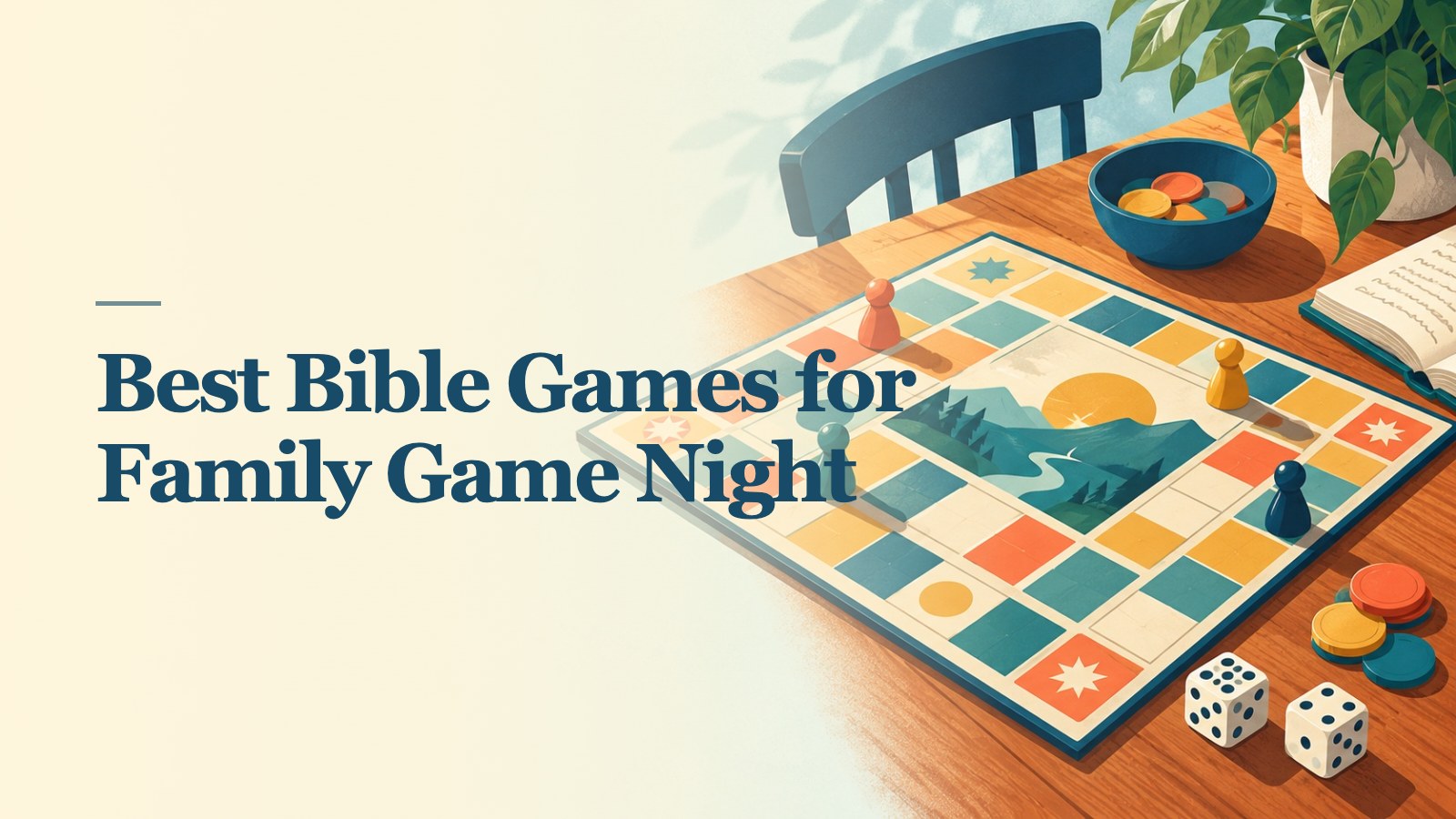
Choose a Bible game by how your family likes to play, not just by the religious theme. For matching and planning, compare Bible Sequence. For a board journey with a different goal from accumulating property, consider Bibleopoly. For a compact clue-based activity, The Action Bible Guess-It Game is the most flexible starting point here.
I would also ask whether the youngest player needs to read, how much biblical familiarity the game assumes, and whether everyone enjoys competing. The right game gives the whole group a way to participate.
This is a research-based comparison of rules descriptions and product identities. I have not play-tested these games or timed a family session. Availability of an older game does not establish that it is currently in print.
Compare the kind of play
| Game | Main activity | Audience evidence | Main check |
|---|---|---|---|
| Bible Sequence | Match pictures and build a row of counters | Older descriptions: ages 6+, 2 to 6 players | Confirm the exact edition and included instructions |
| Bibleopoly | Move around a board and work toward building a church | Distributor: ages 8+, 2 to 6 players | Read the rules; it is not simply ordinary Monopoly |
| The Action Bible Guess-It Game | Guess a person, place, or thing from clues | Publisher describes multiple ages and play modes | Check the box's age label and reading needs |
1. Bible Sequence: for matching and planning

Bible Sequence
The Jax product is ASIN B0042VJOS2. The manufacturer-supplied description reproduced by Storkz explains matching a card’s picture to the board and placing a counter, aiming for five in a row. The cards also identify Bible stories and references.
I would consider it when the family wants a recognizable strategy mechanism without relying only on recall questions. Reading the references can become an optional conversation after play rather than a rule I would invent for the purchased game.
Watch for: this is an older product, and seller stock may be new or used. Check components and instructions. Do not transfer player counts from ordinary Sequence to this particular version.
2. Bibleopoly: for a longer board-game session

Late for the Sky’s Bibleopoly is ASIN B00000JMNM. Its distributor lists two to six players and ages eight and up. The theme includes biblical places and a church-building goal.
I would read the rule sheet before choosing it for a family that expects the exact experience of Monopoly. The familiar-looking format does not mean every rule, goal, or interaction is the same.
Watch for: a board game is not a historical map or a Bible curriculum. Treat its theme as a starting point for interest rather than a complete source of biblical knowledge. I have not verified a current printed rulebook’s exact session length, so I would leave the evening flexible.
3. The Action Bible Guess-It Game: for a portable clue activity

The Action Bible Guess-It Game (Action Bible Series)
The updated game is ISBN 9780830786695. David C Cook describes ninety-nine oversized clue cards about biblical people, places, and things, with several ways to play. It is a card game, not a folding-board game.
I would consider it when space or travel matters and the group enjoys clues. The publisher’s general description says ages six and up, while its product-details section gives seven to ten. Check the actual box and sample difficulty rather than treating either label as a guarantee of independent play.
Watch for: children with less biblical background may need an adult reader or a more cooperative approach. If you adapt the activity, explain that you are using a house variation rather than quoting the official rules.
How I would choose for a mixed-age family
Let the youngest player try a sample task: match a picture, follow a move, or understand one clue. Separate reading help from game knowledge. A child can know a story while still needing someone to read a card.
I would avoid making every round feel like a test of who is the best Christian. A game can be fun, prompt a question, and end without a lesson. If a claim or answer seems unclear, look up the passage together later.
Check these before ordering
Confirm the player count, language, age label, contents, and condition of the exact edition. For a used copy, ask whether all cards, counters, and instructions remain. Similar names or themed editions may have different rules.
For non-game family reading, compare devotionals for kids. If the Action Bible illustrations are the appeal, see the storybook review while remembering that the book and game are separate purchases.