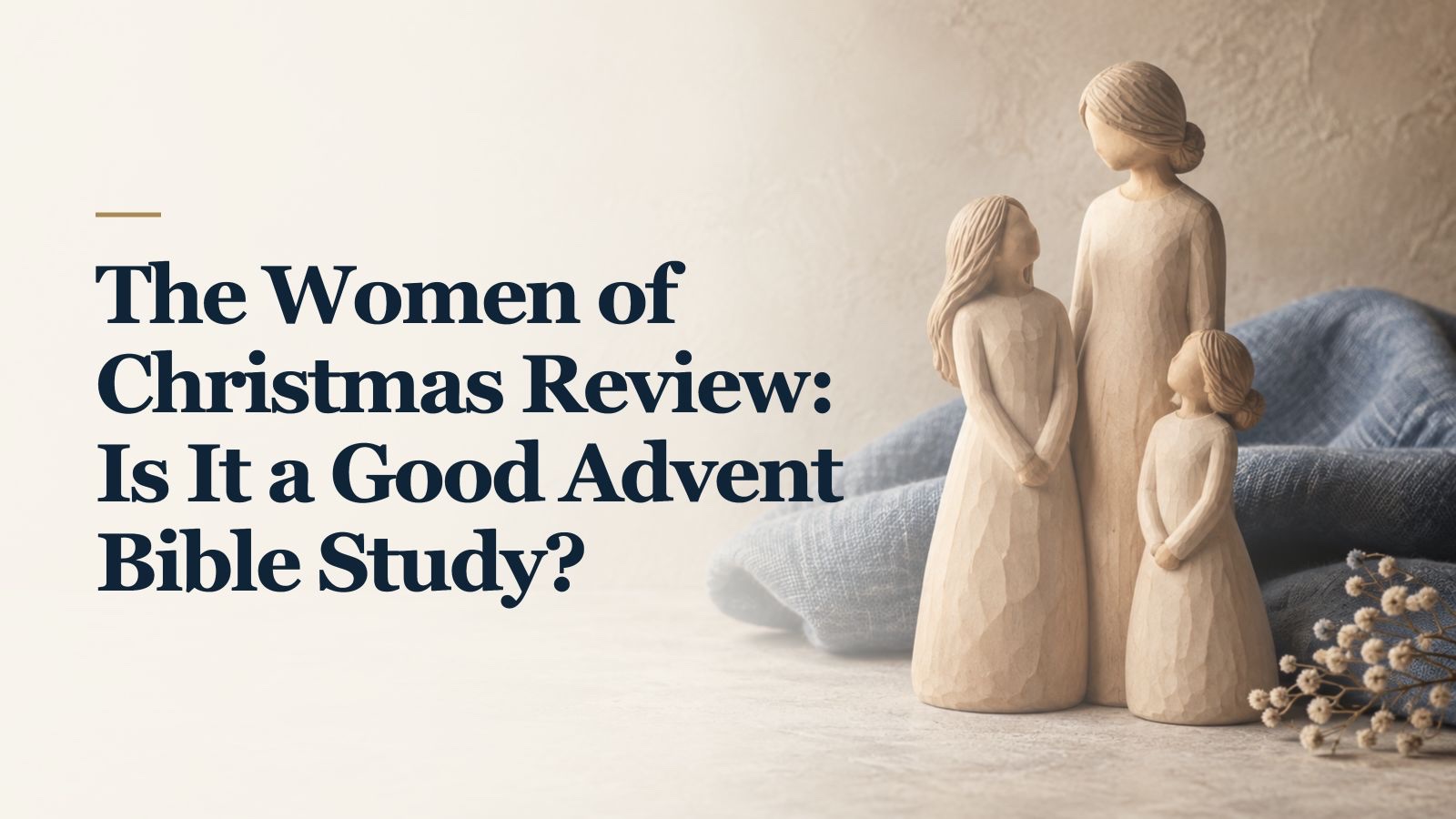
The Women of Christmas is worth a look if you want an Advent study centered on Elizabeth, Mary, and Anna. I would choose it for a reader or women’s group that wants to spend time with their biblical stories and discuss a response.
Liz Curtis Higgs takes a focused route into the Christmas narrative. That focus is its main attraction: three lives give you a manageable place to begin, while the significance of Jesus’ coming stays central.
This is a research-based review of the WaterBrook hardcover, ISBN 9781601425416.

A focused seasonal book for readers who want to examine the women surrounding Jesus’ birth.
Best for: Personal Bible reading or a discussion group willing to keep the biblical passages open.
Highlights
- Specific attention to Elizabeth, Mary, and Anna
- The author provides guidance for group use
- A manageable subject for seasonal conversation
Watch-outs
- The three-woman focus does not cover every part of the Christmas narrative
- Group leaders still need to choose a schedule
- Personal application should stay distinct from what Scripture explicitly says
What is The Women of Christmas?
It is a nonfiction Christian book exploring the biblical stories of Elizabeth, Mary, and Anna. The publisher describes Higgs’s approach as examining their stories closely and inviting the reader to reflect on Christ’s coming.
| Author | Liz Curtis Higgs |
|---|---|
| Full title | The Women of Christmas: Experience the Season Afresh with Elizabeth, Mary, and Anna |
| Publisher | WaterBrook |
| Selected format | Hardcover |
| Length | 224 pages |
| Print ISBN | 9781601425416 |
I like the usefulness of that defined scope for planning. A group can identify the passages it will discuss before deciding how much additional reading to assign. You do not need a room full of people with the same level of Bible knowledge to begin asking careful questions about the text.
Why focus on Elizabeth, Mary, and Anna?
The three accounts invite attention to different circumstances: Elizabeth’s pregnancy, Mary’s response to Gabriel, and Anna’s recognition of Jesus in the temple. Luke gives each woman a place in the unfolding story.
I would avoid reducing them to a personality quiz or a list of qualities every woman must copy. Start by asking what each passage reveals about God’s action and Jesus’ identity. Then consider how the people in the account respond.
Their differing circumstances also make a useful opening for conversation across generations. Let participants make their own connections instead of assigning everyone a role. A reader can appreciate another person’s story without having experienced the same situation.
Does it work as an Advent group study?
Yes, with a leader who plans the reading and discussion. Higgs’s official book page offers a leader’s guide specifically for using the book as a study.
I would examine that guidance and the book before setting meeting dates. If your group meets only a few times before Christmas, choose a pace everyone can realistically follow. Do not promise that one meeting per biblical character will automatically match the author’s chapter arrangement.
A helpful meeting could begin with the passage, allow time for questions, then invite one practical response. Make it easy to participate without reading aloud or sharing personal experiences. If your group prefers a different format, my Advent devotional guide compares other options.
Can you read it on your own?
You can read at your own pace and use the biblical accounts as a framework. I would keep three columns in a notebook: what the passage states, what I am learning, and what I still need to investigate.
That distinction is useful in any devotional study. An author’s illustration may help you imagine a scene, but it should not quietly become a detail you believe the Bible records. Return to the passage when an explanation interests or puzzles you.
For further options after the season, my Bible studies for women guide compares resources with different formats and commitments.
A conversation starter from Luke
Read Luke 1:26-38, then Luke 2:36-38. For Mary, ask what the announcement says about the child and what question she asks. For Anna, notice what the passage says about her worship and her response when she encounters Jesus.
Compare what the text gives you with what you might be tempted to add. You can have a rich conversation without supplying imagined dialogue or deciding exactly how either woman felt at every moment. These prompts are my own, not reproduced from the book’s study materials.
Who should choose a different resource?
Someone who wants a brief numbered reading for every day of December should inspect the sample before choosing this book. Someone seeking extensive technical commentary will also need a resource designed for that purpose.
I would not buy several copies for a group until the leader has checked the edition and planned the schedule. For a reader who wants focused seasonal Bible reflection and conversation, though, the book has a clear and useful place.
Sources and review approach
Product facts come from WaterBrook’s publisher page and Liz Curtis Higgs’s official book page. The Amazon link above identifies the exact edition researched. Reading plans, discussion prompts, and buying advice here are my own suggestions. I have not handled this edition or completed a reading or activity trial, and this review does not summarize customer reviews.