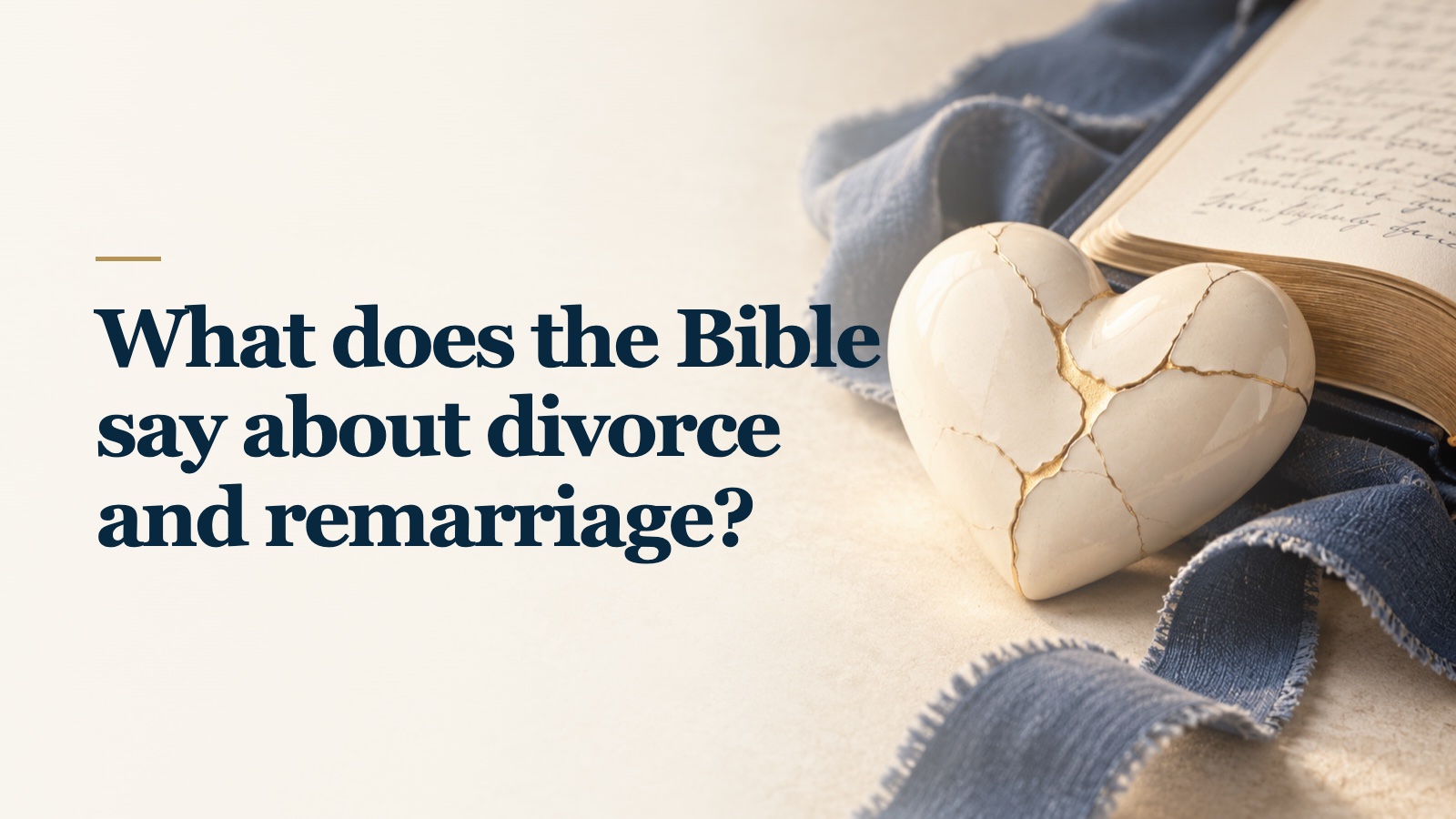
If you’re reading about divorce and remarriage, this may be much more than an abstract question. You may be grieving a marriage, trying to understand your responsibilities, or wondering whether there is hope after a painful chapter. I want to begin by acknowledging the person behind the question. You deserve thoughtful care rather than a verdict delivered without listening.
The Bible treats marriage as a serious covenant and also addresses the reality of broken relationships. Christians differ on how particular passages apply to divorce and remarriage. A short article can introduce those passages, but personal situations need patient, informed counsel.
What did Jesus teach about marriage?
In Matthew 19:3-9, NKJV, religious leaders question Jesus about divorce. He points back to God’s intention for marriage and challenges the casual treatment of a spouse. He also discusses sexual immorality within His teaching about divorce and remarriage.
The passage deserves a careful reading, including the question Jesus was answering. It should not be used to make light of commitment, and it should not become a way to speak cruelly to someone already carrying deep grief.
Some Christian traditions understand the exception Jesus names as permitting divorce and remarriage in those circumstances. Others interpret the permitted responses more narrowly. Understanding your church’s reasoning may take a longer conversation than the one you first expected.
What does Paul add?
1 Corinthians 7:10-16, NKJV addresses believers in several marriage situations. Paul discusses separation, reconciliation, and a marriage in which an unbelieving spouse chooses to depart. His instruction makes room for actual circumstances rather than treating every household as identical.
Christians differ about the implications of abandonment and the circumstances in which remarriage is permitted. Those differences are a reason to study carefully and seek wise counsel, not to assume we know someone else’s whole story.
If there is abuse or danger, getting to safety and seeking qualified help are urgent practical concerns. You do not need to settle every theological question before asking for protection. A call to honor marriage must never become an excuse to ignore harm.
Is there hope for a wounded heart?
The psalmist says of God:
“He heals the brokenhearted And binds up their wounds.”
That is a picture of God’s care within a psalm celebrating His restoration of His people. It does not promise that healing happens on our preferred schedule. It does encourage us to bring our pain before Him.
Romans 8:1, NKJV also reminds believers that life in Christ is not defined by condemnation. Grace invites honest repentance where needed and offers a future beyond shame. It does not require us to minimize what happened.
What is a wise next step?
Find someone who will listen carefully, understand the relevant passages, and take your wellbeing seriously. Ask for practical help as well as prayer. Give important decisions the attention they deserve.
Our article on forgiveness may be helpful as you work through hurt and trust. Wherever you are in this story, you can seek God with honesty. Painful circumstances do not place you beyond His care.