

For an early-to-late teen who wants reflective questions, I would start by comparing New Morning Mercies for Teens. For an older student, The One Year Alive Devotions for Students offers a different life-stage focus. Jesus Calling’s teen edition suits readers who welcome its distinctive first-person voice.
I would involve the teenager in choosing. A book that a parent likes may still be the wrong reading style for the person who will open it each day.
This comparison uses publisher descriptions and exact product identities. I have not tested engagement with teenagers or completed every entry. Published audience ranges are guidance, not a judgment about any particular teen’s maturity.
Compare audience and voice
| Book | Published audience or emphasis | Reading use | Important distinction |
|---|---|---|---|
| New Morning Mercies for Teens | Crossway describes ages 13 to 21 | Personal reflection or discussion | Evangelical, Reformed gospel emphasis |
| The One Year Alive Devotions for Students | Tyndale lists ages 16 to 22 | Older high-school and college reading | An older edition with life-stage examples |
| Jesus Calling, Teen Cover | Publisher description targets teens | Brief personal reflection | Written as if Jesus speaks to the reader |
1. New Morning Mercies for Teens

New Morning Mercies for Teens: A Daily Gospel Devotional
Paul David Tripp’s teen hardcover is ISBN 9781433592362. Crossway describes meditations, Bible verses, and prompts adapted for ages thirteen to twenty-one. The hardcover press page identifies the linked print edition.
I would compare this first when a teenager wants a reading that leads to a question rather than only an encouraging sentence. Its prompts can support private reflection or a conversation with a parent or youth leader.
Watch for: Tripp writes from an evangelical, Reformed perspective. Preview the language and treatment of issues that matter to your family. The adult book is a separate edition, and the teen title should not be confused with the newer children’s resource.
2. The One Year Alive Devotions for Students

The One Year Alive Devotions for Students
Rick Christian’s softcover is ISBN 9781414313740. Tyndale lists an audience of sixteen to twenty-two and describes illustrations from high-school and college life. That makes it a more specific choice than simply labeling it a book for every teenager.
I would consider it for an older student who wants a familiar daily format tied to that stage of life. It may also be useful as a shared starting point before college, provided the reader welcomes the style.
Watch for: the publisher lists the softcover’s publication in 2009. Themes can remain useful while examples feel dated. Read a current sample rather than assuming an older edition directly addresses today’s social media or technology.
3. Jesus Calling, Teen Cover
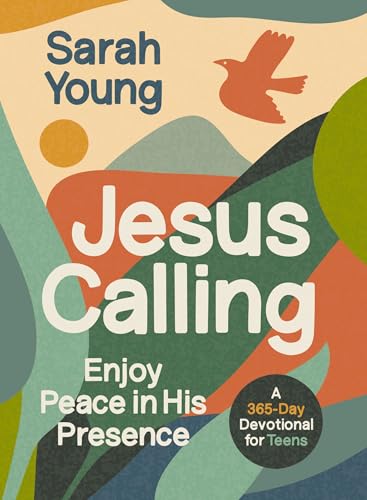
Jesus Calling, Teen Cover, with Scripture References: Enjoy Peace in His Presence (A 365-Day Devotional for Teens)
The linked teen-cover edition is ISBN 9781400254873, a separate product from older teen or children’s covers. The series’ book collection shows why format matters when selecting a gift.
The writing presents reflections as if Jesus is addressing the reader. I would explain that voice clearly: it is the author’s devotional composition, distinct from the Scripture references. A teenager should not have to guess which sentences are biblical quotations.
Watch for: some readers appreciate the direct, personal tone; others prefer an author who speaks about the passage in their own voice. Let the reader’s preference and your church context guide that choice.
Independent reading or family conversation?
For independent reading, I would let the teen decide which notes to keep private and which questions to bring to you. Ask what they are thinking about without requiring a report on every devotional entry.
For a family discussion, try one reading and one question, then give each person room to answer or pass. A prompt should begin a conversation, not become a test of whether someone gives the expected religious answer.
These are suggested habits, not promises that a devotional will resolve stress or guarantee spiritual growth. A book can support an ongoing relationship with Scripture and trusted people.
What else should you check before buying?
Compare print size, the length of a sample reading, the author’s use of Scripture, and whether the book expects a separate Bible. If the teen mainly wants to read the Bible itself, the beginner Bible guide may be the better starting point. For an older student exploring other devotional styles, see the college-student guide.
My priority is a book the teen chooses willingly and can question honestly. New Morning Mercies offers reflective prompts, Alive has an older-student setting, and Jesus Calling brings a distinct devotional voice that should be chosen deliberately.