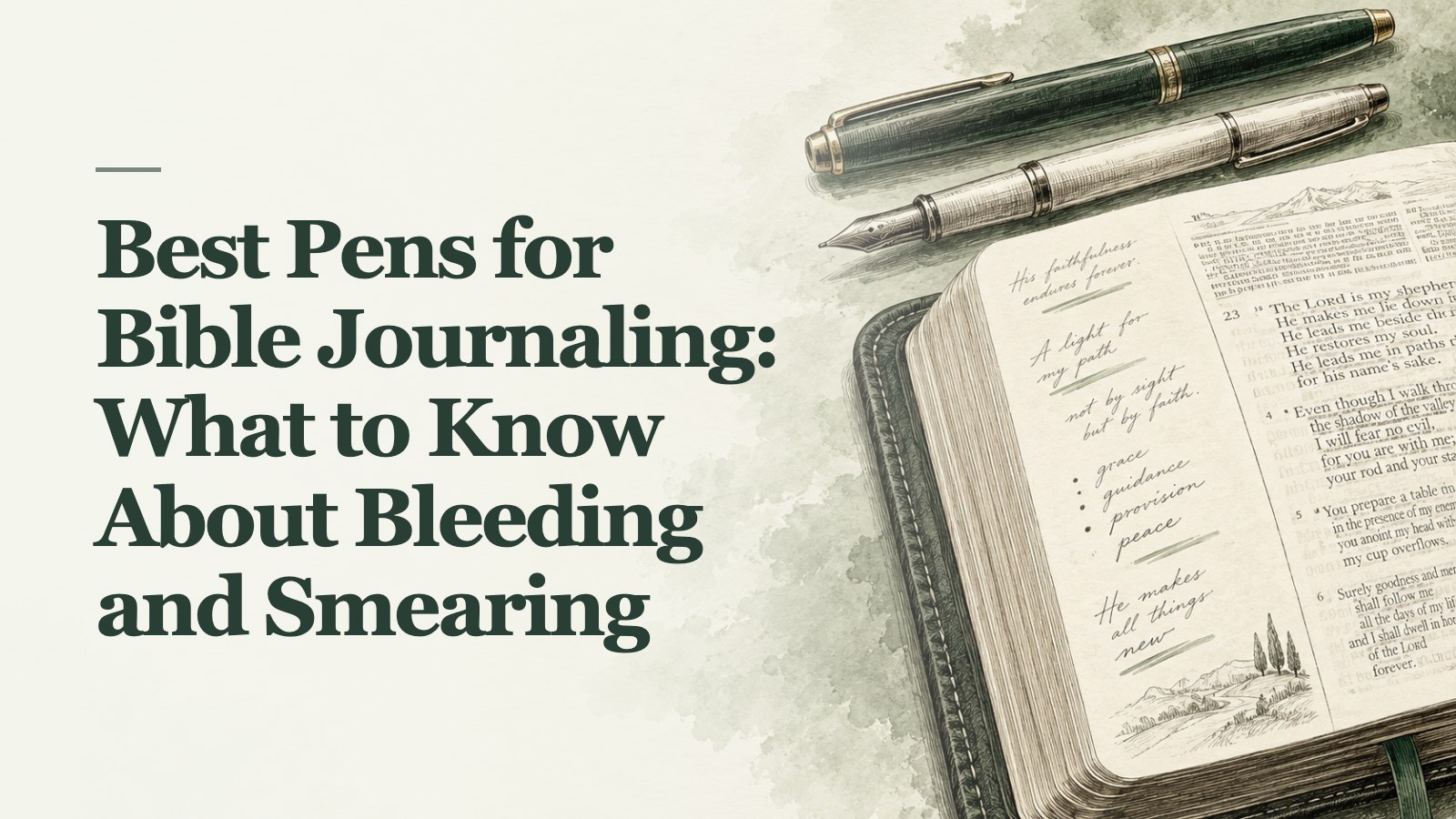
For small Bible-margin notes, I would start by comparing a fine pigment liner such as the Sakura Pigma Micron with a pen you already own. For longer writing in a separate notebook, a Pilot G2 may be more useful. A mixed pen-and-highlighter set makes sense only if you need both tools.
I would not promise that any pen works without bleeding or smearing in every Bible. Paper, pressure, ink amount, drying time, and repeated strokes all affect the result.
This is a research-based comparison of pen formats and product identities. I have not run a paper or drying-time test. Manufacturer ink claims are identified as such, rather than presented as my own results.
Compare the task before the pen
| Option | Main reason to consider it | What remains to test |
|---|---|---|
| Sakura Pigma Micron 005 | A fine pigment-liner format for controlled notes | Your paper, handwriting pressure, and drying behavior |
| Pilot G2 0.7 mm | A retractable gel pen for everyday notebook writing | Whether its ink amount suits thin Bible paper |
| BLIEVE highlighter-and-pen set | A combined supply purchase | Each pen and highlighter separately |
1. Sakura Pigma Micron 005

Sakura Pigma Micron pen 005 Black ink marker felt tip pen, Archival pigment ink, fine point for artist drawing pens - 8 pen set
The linked product is an eight-pen black-ink 005 set, ASIN B01N1W01E2. Sakura describes Pigma Micron as pigment-based ink, with a range of point sizes and resistance to smearing after drying. Its claim is compatibility with most papers, not every Bible page.
I would consider a fine liner when you want small letters or an underline without the broad mark of a highlighter. Use light pressure and let the nib do the work. Buying eight identical pens is useful only if you expect to use or share that many; a smaller local purchase may be enough to start.
Watch for: the number 005 is a product size designation, not a reason to call it a 0.005 mm line. Check the manufacturer’s size chart for the actual line width. Also keep dry-ink water resistance separate from an untested promise about highlighters on your paper.
2. Pilot G2, fine 0.7 mm

PILOT G2 Premium Gel Pens, Fine Point 0.7mm, Black Ink, 12-Pack | G2 pilot pens, refillable and retractable ball, gel pens for journaling, writing pens, quick-drying ink, contoured grip
This card identifies a twelve-pack of black 0.7 mm retractable gel pens. Pilot’s G2 collection includes several tip sizes and colors, so match the exact pack rather than transferring a result from a different version.
I would first consider this for longer prayers or sermon notes in a separate notebook. If you already enjoy writing with a G2, there is no need to abandon it simply because another pen is marketed for Bible study.
Watch for: a familiar notebook pen can put more ink on thin paper than you want. Test it in the Bible before making extended notes, and check for smearing when your hand passes over the writing. I have not measured its drying time here.
3. BLIEVE highlighters and gel pens

The listed BLIEVE set combines highlighters and gel pens, ASIN B0C5BFBR1T. I would compare it when you need both categories and like a coordinated set.
Watch for: the product’s no-bleed wording does not establish identical behavior for every included tool. Test the pen, the highlighter, and highlighting across dried pen writing as three separate tasks. A successful test with one color is not a result for all colors.
A useful three-step test
Use a discreet area made from the same paper as the biblical text, if possible. A thick presentation page may behave differently. Write a short word with normal pressure, let it dry, and inspect the reverse side.
Next, check whether the mark shows through without penetrating. That is ghosting, which differs from bleeding. Finally, if you plan to highlight notes, test a single light pass over fully dried writing and check for smearing.
This is a practical compatibility check, not an archival test. I would keep untested materials away from especially fragile or meaningful pages.
What else matters for journaling?
Check whether your handwriting fits the available margin and whether you can read the biblical text around your notes. For longer reflections, a notebook plus passage reference may be easier than filling every margin.
The journaling Bible guide compares writing layouts. For broad marks and a color key, use the highlighter comparison. Start with the smallest set that meets your actual writing needs, then add tools after learning what your paper and routine can handle.