
For very thin Bible paper, I would start by considering a solid gel highlighter and testing one light stroke on a back page. Choose a dual-tip liquid-ink marker if underlining and more controlled marks matter most. Neither a product name nor a no-bleed label guarantees the result in every Bible.
This guide compares ten existing options by format and intended use. These are research-based recommendations from product information, not a hands-on performance ranking. I have not measured bleeding, drying time, smearing, or long-term page effects for these sets.
My starting points are Mr. Pen’s eight-color gel set for broad highlighting, Zebra Mildliners for a chisel-and-bullet combination, and a yellow-only gel pack if you do not need a color system. More colors are useful only when they help you read the passage.
Bleeding, ghosting, and smearing are different
- Bleeding: color penetrates the paper and marks the reverse side.
- Ghosting: you can see the mark through thin paper without ink necessarily soaking through.
- Smearing: a mark moves or disturbs other writing when touched or highlighted over.
An attractive mark on one sheet does not prove how it will behave in another Bible. Paper thickness, surface, pressure, repeated passes, and the ink underneath all matter. I would treat manufacturers’ no-bleed language as a product claim to check on your own pages.
Ten Bible highlighters compared
| Set | Format or advertised feature | Why consider it? | Before buying |
|---|---|---|---|
| Mr. Pen, 8 colors | Solid gel | A simple starting point for broad highlighting | Gel is not a fine writing tip |
| Zebra Mildliner, 10 pack | Chisel and bullet tips | Highlighting and underlining | Test liquid ink on your paper |
| Mr. Pen Aesthetic | Chisel tip | Wide or narrow marks with one tip | Check the exact color assortment |
| U.S. Office Supply, 6 pack | Advertised as dry gel | An alternative to liquid markers | Check waxy residue and show-through |
| Mr. Pen Yellow | Yellow twist-up gel | One-color marking | No separate theme colors |
| BLIEVE Pastel, 8 pack | Dual tip | Pastel themes and underlining | Fine point is not proof of no bleeding |
| BLIEVE highlighters and pens | Mixed writing tools | A combined journaling set | Test pens and highlighters separately |
| konket, 12 pack | Double-ended design | A larger assortment | Check contents of the current listing |
| Utron, 12 colors | Pastel marker set | More theme colors | Check whether pale colors remain visible |
| DIVERSEBEE Pastel | Eight-color gel set | Pastel colors in a gel format | Check precision and page feel |
1. Mr. Pen No Bleed Gel Highlighters, 8 Pack

Mr. Pen- No Bleed Gel Highlighters, Vibrant Colors, 8 Pack | Bible Highlighters and Pens No Bleed, Bible Markers for Study, Journaling, School Supplies and Accessories
The listing identifies eight vibrant gel colors. I would consider this format when my main task is marking a verse rather than writing a small margin note.
Watch for: A solid gel tip is broader than a pen. Try a light single pass, check the reverse side, and see whether you like the feel of the mark before covering a full paragraph.
2. Zebra Mildliner Highlighters, 10 Pack

Zebra Pen MILDLINER Highlighter, Neutral and Gentle Colors, Dual Tip, 10-Pk | No Bleed, Broad and Fine Point Tip, Ideal for Bible Highlighting, Journaling, School, Teacher and Office Supplies (78701)
Zebra identifies the Mildliner as a double-ended marker with chisel and bullet tips and translucent, water-resistant ink. That combination is useful when you want both a broad line and a smaller underline.
Watch for: The fine end is a marker tip, not a ballpoint pen. Water resistance also does not establish that a mark will never show through Bible paper. Test each color you intend to use.
3. Mr. Pen Aesthetic Highlighters, 8 Pack

Mr. Pen- Aesthetic Highlighters No Bleed, 8 Pack, Candy Colors | Chisel Tip, Cute Highlighters Assorted Colors for Journaling, Highlighting, Underlining, Fast Dry, Back to School Supplies
This candy-color set uses a chisel tip. Turn the tip to vary the width instead of buying a separate tool just for underlining.
Watch for: Do not assume that the liquid-ink aesthetic set performs like the same brand’s solid gel sticks. Match the listing and pack size to the card below.
4. U.S. Office Supply Bible Safe Highlighters, 6 Pack

U.S. Office Supply Bible Safe Highlighter, Set of 6 Assorted Colors | Bright Fluorescent Colors, Dry Bible Highlighters No Bleed, Fade or Smear, Safe Gel Markers, Accessories, Study Guide
The product is marketed as a six-color dry Bible highlighter set. It belongs on the shortlist if you want an alternative to a conventional wet marker.
Watch for: Dry and no-bleed are listing descriptions, not a zero-risk promise. Check the reverse of the page and whether any residue bothers you.
5. Mr. Pen Yellow Gel Highlighters, 8 Pack

Mr. Pen- Yellow Gel Highlighter, 8 Pack | Twist-Up Bible Highlighters No Bleed Through, Fast Drying, Odor-Free Gel Highlighter for Bible Study, Journaling
Eight yellow twist-up gel highlighters make sense if you want one familiar highlight color and replacement sticks rather than a large palette.
Watch for: This pack is yellow only. If you want prayer, promises, and questions in different colors, choose an assorted set. I would not promise that a gel stick can never dry out.
6. BLIEVE Bible Highlighters, Pastel, 8 Pack

BLIEVE Bible Highlighters No Bleed Through, Pastel Colors, Dual Tip, 8 Pack | Aesthetic Cute Highlighters, Chisel Tip & Fine Point For Bible & Journaling, Back To School Supplies
The eight-pack listing specifies pastel colors with chisel and fine points. It is worth comparing with Mildliners if you prefer softer color categories.
Watch for: Pale colors may be harder to distinguish under your reading light. Check the actual swatches and test both tips before using them for a detailed system.
7. BLIEVE Aesthetic Highlighters and Gel Pens

BLIEVE - Aesthetic Highlighters and Gel Pens With Soft Ink And Tip, Bible Highlighters and Pens No Bleed, Dry Fast Easy to Hold, for Bible Journaling Planner School Supplies (Pastel)
This listing combines highlighters and gel pens. It can simplify shopping when you need tools for both marked passages and handwritten notes.
Watch for: A highlighter test does not establish how the included pen behaves. Test the pen, let the writing dry, then test highlighting across that writing as a separate step.
8. konket Pastel Highlighters, 12 Pack

konket 12Pcs Aesthetic Cute Highlighters Bible Pastel Highlighters and Pens no bleed Assorted Colors Double-ended design for Office journaling supplies
The listing describes twelve pastel double-ended highlighters. I would consider it when the number of included markers matters more than staying within a small palette.
Watch for: Check the current pack contents rather than assuming twelve markers mean twelve distinct useful themes. A smaller system may be easier to remember.
9. Utron Bible Highlighters, 12 Colors

Utron 12pcs Bible Highlighters, Pastel Highlighter Set, No Bleed Bible Highlighters (12 Color)
The listed twelve-color assortment offers room for a broader color key. It is an option for readers who already know they want more than a few categories.
Watch for: The product title does not supply a tested paper-compatibility result. Check tip details, color visibility, and how easily neighboring shades can be told apart.
10. DIVERSEBEE Bible Highlighters, Pastel

DIVERSEBEE Bible Highlighters and Pens No Bleed (Pastel) | 8 Pack Assorted Colors Gel Highlighters Set, Cute Bible Markers for Study Journaling School Supplies and Accessories
This eight-pack offers a gel format in pastel colors. It is a different buying decision from choosing a dual-ended liquid marker.
Watch for: Do not expect the precision of a fine pen. Compare the width of the mark with the line spacing in your own Bible before committing to long passages.
A paper test that is more useful than a no-bleed promise
Use a discreet back page made from the same paper as the Bible text, if possible. A thick presentation page may give a misleading result. Make one light stroke, let it settle, and inspect the back under your normal reading light. Then test an underline and a second pass nearby if that is how you intend to use the tool.
If you write notes, make a separate sample with your usual pen. Allow the writing to dry before highlighting it, then check for smearing. This simple check helps you make a choice; it does not establish archival safety or guarantee the result on every page.
Start with a small color key
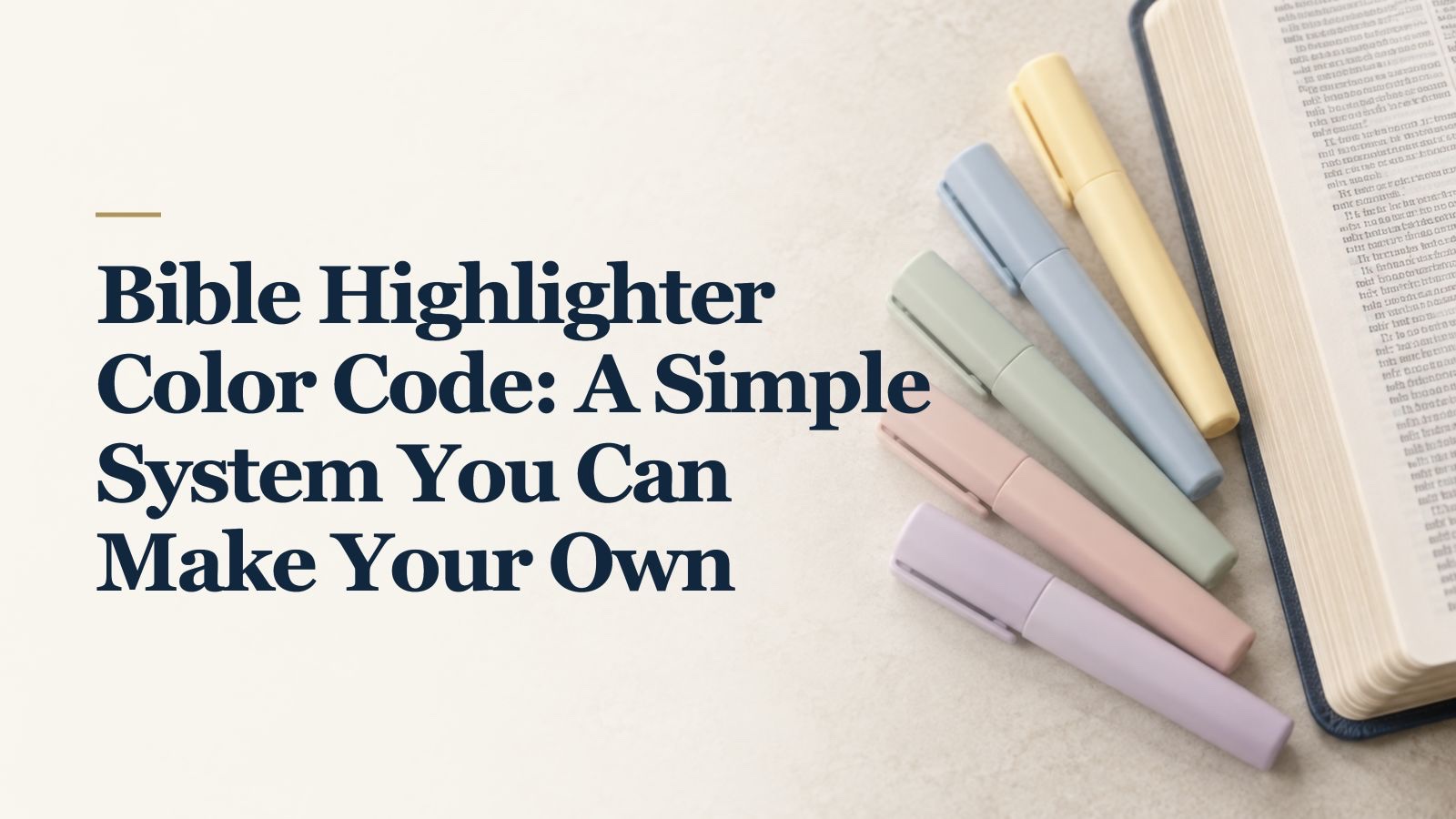
My suggested starting key is yellow for a main idea, blue for a question, and green for a response to practice. Write the key inside a notebook and adjust it when needed. This is one optional method, not a rule about what different Bible themes must look like.
The Bible highlighter color-code guide gives a fuller worked example. If you also want to organize the books, see how to put Bible tabs on before adding them to thin pages.
Do I need special highlighters for a journaling Bible?
Not necessarily. Extra margins tell you where to write, not which ink the paper can handle. Colored pencils may be worth trying for art, while a separate notebook keeps experimental materials away from a treasured Bible. Compare journaling Bible layouts before buying more supplies.
How I made these recommendations
Product identities and pack descriptions were checked against the site’s Amazon product records and current listing information. The distinctions between formats guide my recommendations; these are not comparative laboratory results. Zebra’s Mildliner specifications explain its two tips and ink, and Mr. Pen’s gel-highlighter description explains the brand’s solid-gel approach. That linked manufacturer example is a different twelve-pack, so use each product card to identify the exact pack discussed above.
My final advice: choose the format that fits the marks you actually make, test it on your Bible paper, and begin with fewer colors than you think you need.