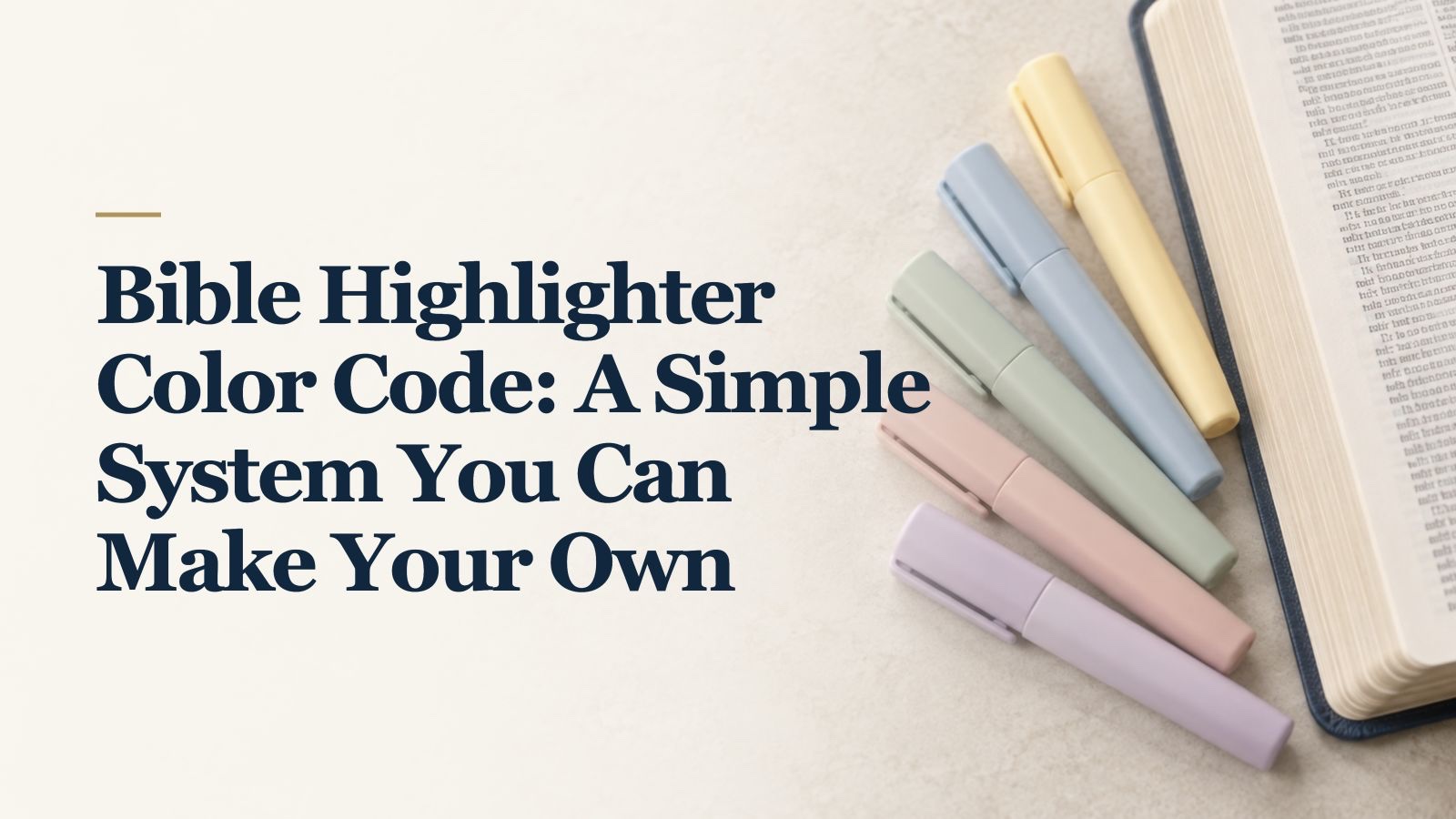
An open Bible and a handful of highlighters can feel like an invitation to study. They can also leave you wondering what, exactly, deserves a yellow line.
I would start with a small color key and one short passage. Give each color a purpose, read before you mark, and leave plenty of the page untouched. The aim is to notice what Scripture says and carry it into your day.
A little color. A clearer purpose.
Use the key below as a starting point. These are personal study categories, not a meaning assigned to colors by the Bible.
A simple Bible highlighter color code
Keep this key beside your Bible for the first few sessions. If you already own different colors, assign the same categories to those instead. There is no need to buy a matching set.
What the passage reveals about who God is and what he does.
What God promises, with attention to whom he is speaking and the surrounding context.
Commands, habits, and examples that help you consider how to live.
Attitudes, choices, and dangers the passage asks you to recognize.
Prayers in Scripture and passages that give language to your own response to God.
The category names matter more than the shades. If blue and purple look similar to you, use a small letter in the margin, or pair one color with an underline. Make the system readable for you.
Read the whole passage before reaching for a color
A sentence can sound like a promise when it is actually a question, a warning, or the words of someone whose advice the story challenges. Start by asking who is speaking, who is listening, and what is happening around the verse.
Read the paragraph once without marking anything. Then look for its main point. Only after that would I choose a phrase to highlight.
That order matters. You are letting the passage shape the key, rather than searching for five things to color because you happen to have five pens.
A worked example: Philippians 4:4-9
Read Philippians 4:4-9 in your own Bible. Paul speaks about rejoicing, gentleness, prayer, peace, and the things believers give their attention to. Here is how I would use the key while working through that passage.
An example to try in your own Bible
Notice the movement from prayer to practice
- Purple: verse 6
- Mark the instruction to bring requests to God with thanksgiving. Write one specific request in your notebook.
- Blue: verse 7
- Notice the assurance about God's peace. Read it alongside the invitation to pray, without turning it into a promise that every difficult circumstance disappears.
- Green: verses 8-9
- Mark one phrase about what to think about or put into practice. Choose a response you can name, rather than a vague plan to do better.
A notebook response: “Today I will take one worry into prayer, thank God for one specific kindness, and give my attention to what is true.” This is a suggested reflection, not a quotation from Scripture.
There is no yellow or rose in that example. That is fine. You do not need to fill every category in every reading, and another reader might reasonably choose different phrases.
If an entire paragraph seems important, a small bracket beside it may do more for you than covering every line.
Prefer something simpler? Use three colors
If five categories feel like too much, begin with these:
- Yellow: What am I learning about God?
- Green: What response does this passage call for?
- Purple: What do I want to bring to God in prayer?
Use that smaller key for a week. Add a category only when you keep wishing you had it. The habit of reading carefully matters more than having an elaborate legend inside the front cover.
You can also study in a separate notebook. Write the reference, make a short observation, and place your color beside the note. Your Bible does not have to become an art project for the study to be worthwhile. Our introduction to Bible journaling offers another way to begin.
What if a verse fits two colors?
It often will. A promise may reveal God’s character. A prayer may contain a confession. Scripture is richer than a filing system.
Choose the observation you are following today. If you want to retain both, underline one short phrase and add a note beside it, or record the second theme in your journal. Try to avoid repeatedly coloring the same line until the words become hard to read.
If your system stops helping, change it. A dated key in the front of a notebook can explain why older marks differ from newer ones.
Choose tools that suit your Bible’s paper
Thin Bible paper behaves differently from an ordinary notebook. A label that says “no bleed” is not a guarantee for every paper, color, or repeated stroke.
Try a small mark on an inconspicuous page before highlighting Scripture. Check the other side, let the mark settle, and see whether closing the Bible transfers color. Seeing a mark through thin paper is different from ink actually soaking through it, but either can affect readability.
If you need help choosing supplies, our Bible highlighter guide compares the options. If you prefer a Bible with themes already marked, the Rainbow Study Bible review explains that different approach. Its publisher’s color categories will not necessarily match this personal key.
Keep the last step about living what you read
Before closing your Bible, put the highlighter down and finish one sentence: “Because of this passage, today I want to…”
It might lead to an apology, a prayer, a conversation, or a question to bring to your small group. That is a useful place for a colorful page to take you.
Reading for the worked example
Philippians 4:4-9 on Bible Gateway. The observations above are my suggested study approach, rather than quotations from a published color system.