
Praying the Names of God for 52 Weeks is worth considering if you want help turning Bible reading into focused prayer. Ann Spangler’s expanded study gives you one theme to return to through the week. I would choose it for someone who wants a little structure while still making room for personal reflection.
The main buying question is whether you want a devotional guide or an in-depth reference work. This book is aimed at prayer and reflection. If you need extensive discussion of Hebrew vocabulary, a Bible dictionary or word-study resource serves a different purpose.
This review is based on the publisher’s description and the exact Amazon edition listing. I have not worked through the full year or tested the paperback’s writing space.
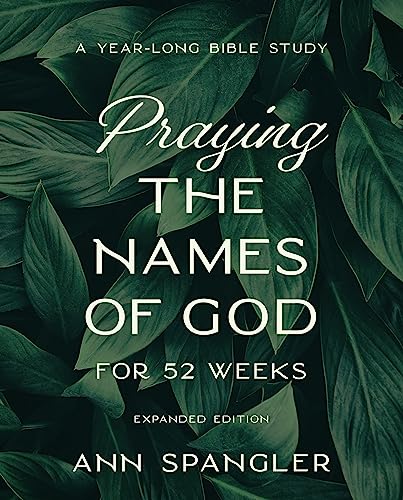
A useful option when you want Scripture to give your prayers a clearer focus and prefer a weekly theme you can return to.
Best for: Readers who want a guided prayer habit without joining a video course.
Highlights
- Weekly focus leaves room to reflect
- Connects names and titles with biblical passages
- Includes prompts and space for personal prayer
Watch-outs
- A guided devotional study, not a Hebrew-language reference
- Similar editions have different extras
- A year-long plan still needs a realistic routine
What does the weekly study include?
Each week connects a name or title of God with a biblical passage and a prayer response. The publisher’s description lists the English name and original-language form, an explanation, biblical context, reflection questions, prayer guidance, and room to write. Key passages come from The Names of God Bible.
| Author | Ann Spangler |
|---|---|
| Edition | Expanded paperback |
| Publisher | HarperChristian Resources |
| Publication | May 16, 2023 |
| Format | 52-week Bible study |
| Print ISBN | 9780310145158 |
That combination may help if your reading and prayer currently feel disconnected. A question about God’s character gives you something specific to consider before moving into your own concerns. It also offers a way to revisit the same passage instead of rushing to a different topic every morning.
I would keep a familiar Bible alongside the study. Read the surrounding passage there, then consider the book’s explanation. A name becomes more meaningful when you see who uses it, what is happening, and what the passage says about God.
How would I fit it into an ordinary week?
Start with one protected reading time and two brief returns to the same passage. That is my suggested routine, not a timetable printed in the book.
At the beginning of the week, read the passage and write one sentence about what it shows you. Later, return to that sentence and turn it into a prayer of praise, trust, or confession. Near the end of the week, consider whether it changes how you approach a particular responsibility or relationship.
A simple notebook entry could use three prompts: “What does this passage say?”, “What am I bringing to God?”, and “What response can I make?” Leave room for questions you cannot answer yet.
Missing a day does not mean you have failed the study. I would resume the same week rather than doubling the next day’s work. The purpose of a routine is to help you return to Scripture, not give you another reason to feel behind.
Do you need a special Bible translation?
You can use the Bible you already read. The included passages use The Names of God Bible, which retains Hebrew names within its English text. Comparing them with your usual translation can help you notice how the same name is represented.
Avoid assuming that an unfamiliar form is automatically more spiritual or that saying a name a certain way makes a prayer more effective. Read for what the passage reveals about God and how you can respond honestly. A pronunciation guide can help with reading aloud, but prayer does not depend on mastering a language.
For someone still choosing a Bible, my study Bible guide explains the kinds of notes and reference helps available.
Which edition should you buy?
The link here is the expanded paperback with ISBN 9780310145158. Check that identifier when comparing formats.
A separate hardcover edition from FaithGateway advertises bonus tear-out cards. Those extras should not be assumed to come with this paperback. ChurchSource currently lists 256 pages for the paperback. Use the ISBN and selected format to identify your purchase rather than assuming that every edition shares the same page count.
If generous writing space is essential, inspect a sample before ordering. A separate notebook may be more comfortable for longer prayers, and it lets you revisit the study without writing over earlier reflections.
Is this the same as The Names of God Bible Study?
No. Ann Spangler’s book and Lifeway’s multi-teacher study are separate resources. My The Names of God Bible Study review covers the eight-session course with video access.
Choose Spangler’s book when you prefer a longer personal rhythm organized around prayer. Consider the Lifeway course when your priority is shared video teaching and discussion over a defined series of meetings. The similar titles can make them easy to confuse when shopping for someone else.
For a gift, I would include a short personal note about why the subject made me think of the recipient. Avoid attaching an expectation that they finish it on your schedule.
A Scripture-based prayer exercise to try first
Here is an original exercise, not a lesson copied from the book. Read Psalm 23 in your own Bible and notice the shepherd imagery. Write down what the psalm says the shepherd does before writing anything about your own situation.
Then form a brief prayer using one observation. For example: “Lord, help me trust your care as I face this responsibility.” Keep the request connected to the passage without treating it as a promise that every circumstance will become easy.
Return to the psalm later in the week. Has your question changed? Is there a line you overlooked? If that slower pattern helps you pray with attention, a weekly guide may be useful.
Who is this study best for?
I would recommend it to a reader who wants steady encouragement and a manageable subject for prayer. It is less suitable for someone seeking a technical word study, a whole-Bible reading schedule, or a short group course.
My recommendation: choose it for the weekly prayer practice, check the exact edition, and give yourself permission to work slowly. A thoughtful return to one passage can be more useful than racing to finish a page.
Sources and review approach
Edition and content details come from HarperChristian Resources via ChurchSource, the separate hardcover listing linked above, and the Amazon paperback listing. The suggested weekly routine and Psalm 23 exercise are my own. This review does not claim firsthand completion or report customer-review themes.