Resurrection Eggs can be useful for an adult-led Easter conversation with children who enjoy opening a small object while hearing a story. I would use the set to support reading about Jesus’ death and resurrection, rather than treat the objects as a complete lesson on their own.
The key buying check is the edition. The Amazon product linked here is 1602006512, an earlier FamilyLife set. FamilyLife’s current 30th Anniversary Edition has a different ISBN and additional contents. Do not assume the older listing includes every newer extra.
This is a research-based review of the activity format and listed contents. I have not inspected or used a physical set. I cannot assess the quality of the small objects, egg hinges, or a child’s response from use.

Consider it for supervised, story-led Easter reading. Confirm the edition and contents, and keep small symbolic pieces away from children who may put them in their mouths.
Highlights
- A tangible cue for discussing the Easter narrative
- A twelve-egg story format
- Useful for a family or small-group conversation
Watch-outs
- Small parts require attention to package age warnings
- Earlier and anniversary editions have different contents
- Objects need an adult's explanation
What is included?
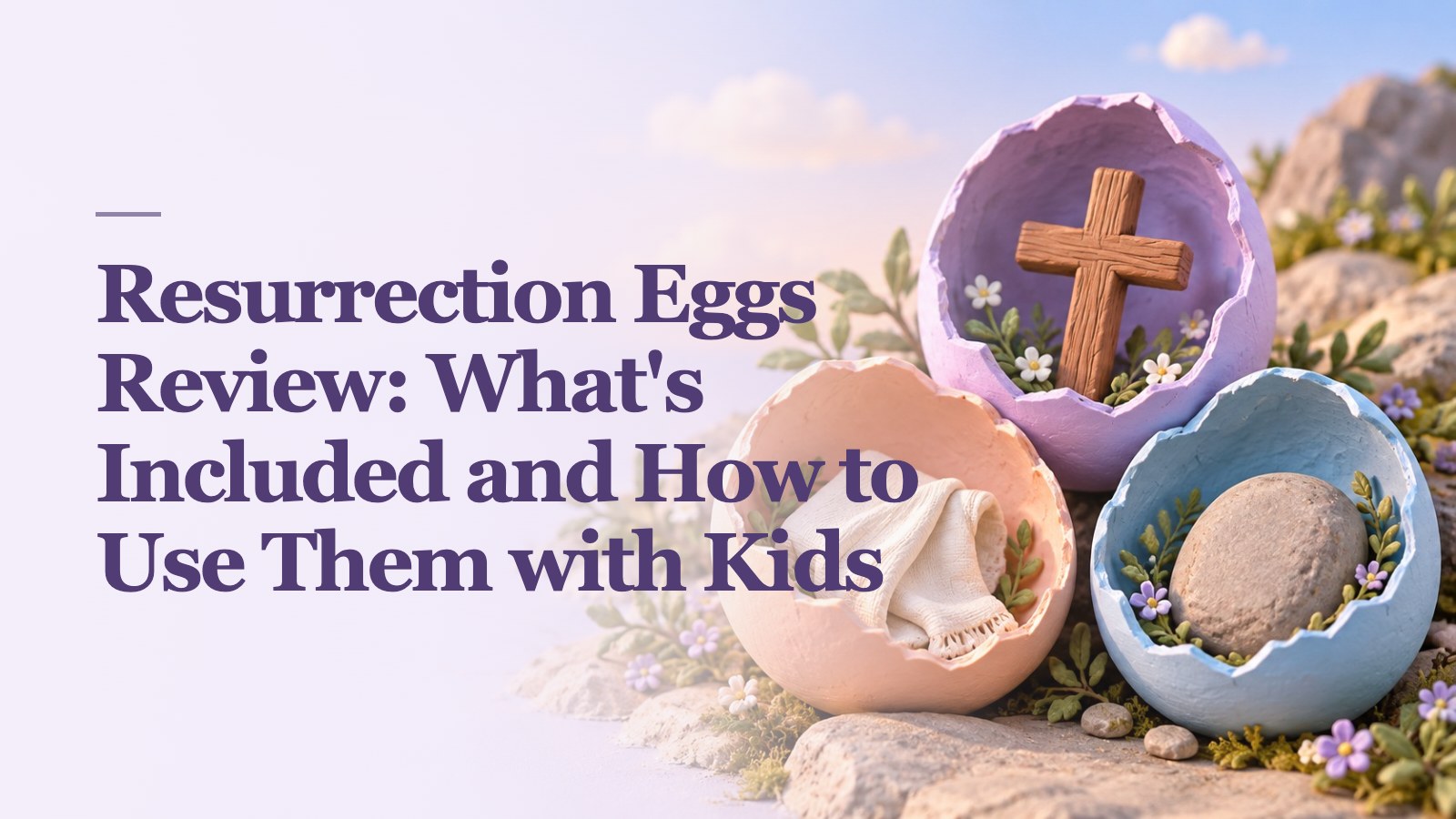
The core FamilyLife format is an egg carton with twelve plastic eggs, symbolic objects, and an accompanying story explanation. FamilyLife’s activity guide describes that twelve-egg concept.
For the current 30th Anniversary Edition, FamilyLife lists a bilingual English/Spanish storybook, stickers, fourteen activity cards, and Jesus Film Project video access alongside the carton and eggs. Its stated ISBN is 9781602009189. Those newer extras are not verified contents of the older Amazon product card above.
I would check the package contents photograph and edition text before buying, especially for a used set. A missing symbol or booklet can matter more to the activity than wear on the carton.
What do the objects do?
They provide a physical cue while an adult tells the Easter story. A child can open an egg, look at its object, and hear how it connects with the account. The object itself is a teaching symbol, not an artifact from the biblical event.
I would explain that distinction without making the session complicated. We are using small reminders to help us talk about the story; the Gospel accounts provide the source.
Which ages does it suit?
Retail descriptions commonly recommend ages three to ten, but package warnings and the individual child should guide handling. FamilyLife’s activity guide warns that the set contains small parts that could be ingested by children ages three and under. I would keep the pieces under adult control whenever mouthing or small-part handling is a concern.
For a younger listener, the adult can hold the object and tell a short part of the story. An older child may enjoy explaining the connection or helping find the Gospel reference. Those are suggested uses, not tested developmental outcomes.
A simple way to use the set
Read the booklet yourself first and check that the pieces are complete. Choose whether to open several eggs in one sitting or spread the story across several sessions. Keep the pieces in their numbered or described sequence so the explanation remains clear.
I would read an appropriate Gospel passage, introduce the corresponding symbol, and ask what the child noticed. Let questions about sadness or death be answered patiently, without requiring a child to give a particular emotional response.
Do you need the videos or a large egg hunt?
No. The central activity is a story and a symbol. Video access is an edition-specific extra, and its inclusion does not require you to use a screen. Likewise, a quiet family reading can serve the purpose without organizing a neighborhood event.
For a group, check that adults can manage the small pieces and that every child can see. Do not make owning the commercial set a requirement for explaining Easter.
Would I choose it over a book?
I would choose it when handling objects adds something useful for the children involved. For a simple read-aloud with fewer pieces to manage, compare the Easter books guide. For regular family reading beyond Easter, see devotionals for kids.
My recommendation is for the format, with edition and small-part checks made first. The conversation and biblical story are the point; the eggs are an aid.