The Crippled Lamb may suit a family looking for a short Christmas story about feeling left out and finding a place to belong. I would read a sample before choosing it for a child whose own experiences of disability or exclusion make the theme especially personal.
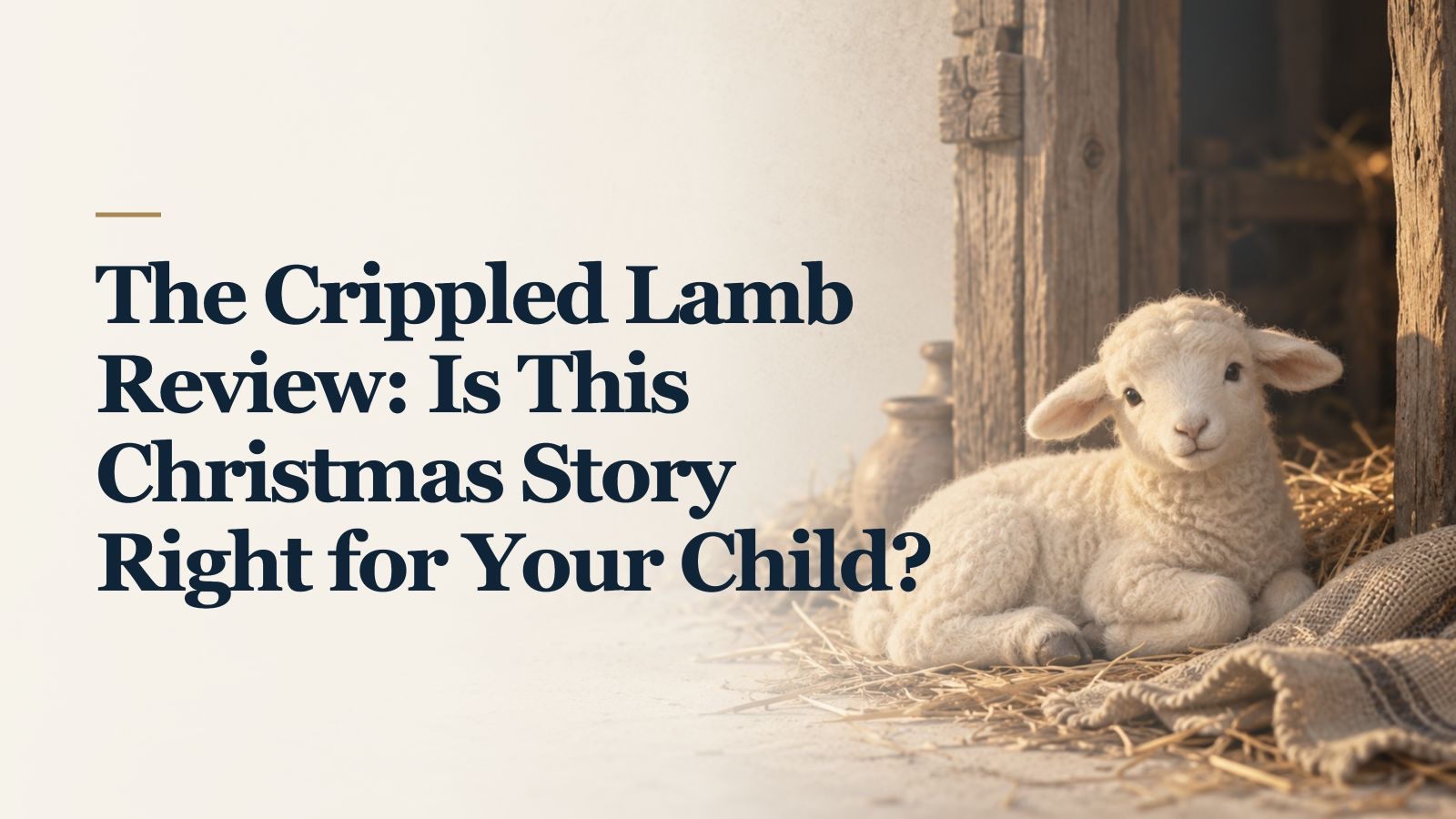
Max Lucado tells an imagined story about Joshua, a lamb with a leg that does not work like the others. Its Christmas setting offers a starting point for conversation, with an adult helping a child understand both the story and its language.
This is a research-based review of the Tommy Nelson hardcover, ISBN 9781400318070.

A Christmas picture-book option for a family ready to talk gently about belonging and the story’s treatment of difference.
Best for: Shared reading with an adult who will listen to a child’s questions and responses.
Highlights
- A short illustrated story suited to reading together
- Christmas setting provides an opening for Bible conversation
- Joshua’s experience can prompt discussion about welcoming others
Watch-outs
- The title uses language some families may find uncomfortable
- Joshua is fictional, not a character in the Bible
- Adults should avoid tying a person’s worth to usefulness or a special task
What happens in The Crippled Lamb?
Joshua feels different and left out because he cannot move like the other lambs. The author’s description presents a Christmas story about God’s care for those who feel alone, with illustrations by Liz Bonham.
| Author | Max Lucado |
|---|---|
| Illustrator | Liz Bonham |
| Full title | The Crippled Lamb: A Christmas Story about Finding Your Purpose |
| Publisher | Tommy Nelson |
| Selected format | 32-page hardcover |
| ISBN | 9781400318070 |
The plot eventually connects Joshua’s situation with an imagined place in the Christmas setting. I would explain from the beginning that this is a made-up animal story. It can prompt conversation about kindness and faith without being presented as an event recorded in Scripture.
What should parents consider about the language?
The title itself deserves a thoughtful preview. Some families may find the word used for Joshua’s condition uncomfortable, especially when disability is part of the child’s own life or family experience.
I would listen to the child’s response instead of assuming the story must feel encouraging to everyone. Ask whether the way Joshua is described seems kind, and what words your family prefers when discussing disability. You can decide that another story is a better fit without losing the opportunity for a valuable conversation.
I also would avoid making a child’s worth depend on discovering a particular job or reason for a limitation. A person matters before they accomplish something useful. That is the perspective I would bring to reading and discussing this story.
How can you talk about belonging?
After a reading, ask what the other characters could do to welcome Joshua. Keep the attention on how people treat one another, including how a group can adapt so someone can participate.
In ordinary family life, that might mean changing a game, waiting for someone to finish, or asking what help they actually want. Do not assume every person wants the same kind of help. Those are my own discussion suggestions, not activities promised inside the book.
For a child who has been excluded, make room to listen without demanding that they tell their story. A book can open a conversation, but the child gets to decide how much to share.
How do you connect it with the Christmas account?
Read a short section of Luke 2 alongside the picture book. Ask what Luke tells us about Jesus’ birth and which animal-story details belong to Lucado’s fiction.
You do not need to remove imagination from family reading. Help a child understand that different books do different things: a story may illustrate an idea, while the Gospel gives the biblical account. That habit is useful with other seasonal legends and retellings too.
My Christmas books for kids guide includes books with different approaches to the Nativity, from biblical retellings to explicitly imaginative stories.
Which edition is reviewed?
This review covers the hardcover with ISBN 9781400318070. The edition listing identifies a 32-page volume. Other versions and bundled products may differ, so check the binding and identifier before ordering.
I have not tested the binding, page durability, or read-aloud experience with a child. A sample can help you judge the prose and artwork, but you will need to examine the actual copy to assess its physical quality.
Who would I recommend it to?
I would consider it for an adult who wants to read with a child and discuss belonging carefully. The short picture-book format may fit a single family storytime better than a continuing Advent chapter book.
I would choose a different title if the wording or plot feels hurtful to the intended reader. The right Christmas book should make room for your child’s questions and dignity. For a child who wants a longer narrative, The Promise and the Light offers another format to explore.
Sources and review approach
Story and illustration information comes from Max Lucado’s official book page. I checked the hardcover edition record against Amazon. The discussion about language and belonging is my editorial guidance. The Amazon link above identifies the exact edition researched. Reading plans, discussion prompts, and buying advice here are my own suggestions. I have not handled this edition or completed a reading or activity trial, and this review does not summarize customer reviews.