The Ultimate Retreat Planning Guide is a practical Christian retreat planning workbook for the person who needs to turn a good ministry idea into an organized weekend. I would recommend it to church volunteers, ministry leaders, and retreat coordinators who want help with the budget, schedule, team responsibilities, and details that are easy to overlook.
I used this guide to plan a men’s retreat for 50 people, and I used all the worksheets. The venue comparison, budget planning, and end-of-retreat follow-up were my favorites. Those are the parts I would pay particular attention to if you are weighing whether this book will be useful for your own event.
The book draws on 20 years of camp and retreat experience, with the author describing work in the industry since 2006. Its useful feature is the combination of planning advice and worksheets you can use to record decisions, assign responsibilities, and prepare for the next event.
Publishing disclosure: Your Next Bible has a publishing and financial connection to this book. This review combines my retreat-planning experience with a review of the final 114-page revised paperback manuscript, ISBN 9798165674556. Comments about using the planning material do not assess the current paperback’s binding or paper.

A useful place to organize a Christian retreat, from the first purpose statement to the team debrief.
Best for: church volunteers and ministry teams who want a retreat planning checklist, practical guidance, and working pages in one resource.
Highlights
- 20 years of camp and retreat experience behind the guidance
- Planning worksheets for budgets, schedules, roles, and follow-up
- Attention to the people attending, including accessibility and welcome
Consider before buying
- Your team still needs to make and carry out the decisions
- Teaching and activities need adapting to your group
- Planning pages work alongside your organization's required procedures
What is The Ultimate Retreat Planning Guide?
The Ultimate Retreat Planning Guide: A practical guide and workbook for Christian retreats is written by Andy McClung of Christian Camp Pro. It addresses the work behind a retreat: choosing a purpose, coordinating people, comparing locations, preparing a budget, building an agenda, hosting the event, and learning from it afterward.
That makes it a different purchase from a devotional or a small-group Bible study. If your question is, “How do I plan a church retreat without losing track of everything?” this book speaks to that problem. If you already have an experienced event team and only need a series of teaching sessions, a focused Bible study may be the more useful next purchase.
The 114-page revised paperback contains 30 chapters, followed by worked examples, message templates, and planning worksheets. The chapters follow the work from choosing a purpose through planning, hosting, and follow-up. Each ends with a practical next step and references to useful pages. You can work through the material in order or turn to the decision in front of you.
What does 20 years of retreat planning knowledge add?
The author dates his camp and retreat work to 2006. For the 2026 edition, that represents 20 years of experience across the practical work of retreats. I would read that as the background behind the guidance, rather than a promise that every suggestion fits every church.
What I value in the guide is its attention to ordinary decisions with real consequences. Someone needs to own registration. The schedule needs room for people to move between rooms. A budget needs to include the small expenses as well as the venue. A plan needs to remain useful when the weather changes.
The opening advice captures that approach:
“Start with the people, the purpose, and the practical limits.”
That short excerpt from the opening note is a good description of the book’s priorities. Choosing a theme is enjoyable, but the retreat also needs to work for the people who will actually attend.
Which retreat planning worksheets can you use?
The worksheets are a major reason to consider the guide. They give the planning conversation a place to land. Instead of leaving a meeting with several good ideas, your team can leave with a decision, an owner, and something to review next time.
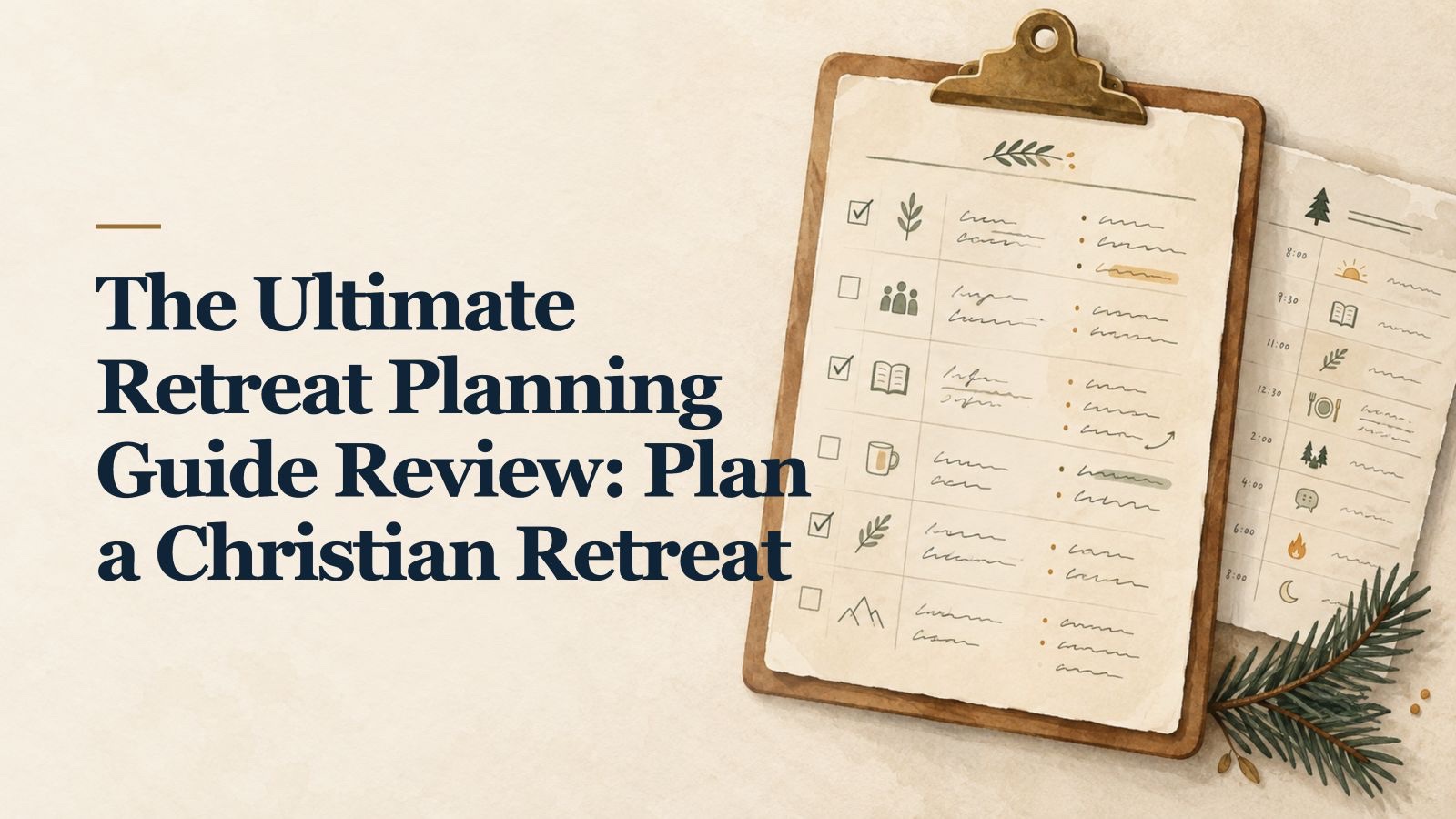
These are examples from the revised paperback’s planning worksheets:
| Planning page | What it helps organize |
|---|---|
| Retreat Brief | Purpose, audience, dates, location, attendance, budget, and the next decision |
| Team Responsibilities | Responsibilities, leads, backups, spending approval, and team updates |
| Venue Comparison and Site Visit Checklist | Questions to compare locations and check the actual arrival experience |
| Budget Planner | Expenses with Estimate and Actual columns, spending approval, and costs that vary with attendance |
| Income and Payment Dates | Registration income, confirmed support, break-even attendance, and payment deadlines |
| Theme and Teaching Planner | Purpose, Scripture, session ideas, teaching team, practical response, and follow-up |
| Participant Agenda and Leader Run Sheet | Guest activities and locations, plus the team's setup jobs, cues, leads, and backup plan |
| Welcome and Packing Planner | Information attendees need before arrival |
| Accessibility Plan | Agreed arrival, room, meal, communication, activity, and emergency-support arrangements |
| Feedback Survey, Team Debrief, and Retreat Report | Participant feedback, improvements with owners and due dates, and a summary for leadership |
The copyright page permits purchasers to copy the blank planning worksheets and adapt the message templates for personal use or internal use by their own church or ministry. That permission excludes resale and public distribution. Use the pages that help your team. Completing every blank is less important than making the decisions your retreat needs.
My experience planning a men’s retreat for 50 people
I worked through all the worksheets for our 50-person men’s retreat. Three areas stood out to me: comparing venues, working through the budget, and following up after the retreat.
Those favorites also explain what I look for in a church retreat planning resource. The location decision comes early, the budget affects what is possible, and follow-up keeps the work from ending when everyone goes home. I want a guide that follows the whole process, and those parts of this one were especially useful to me.
Your group may be smaller, larger, or planning a different kind of weekend. I would still begin with those three areas, then use the other worksheets to connect the details. My experience gives me a practical reason to recommend the guide, while your own event should determine how you use it.
How useful is it for a church retreat budget?
The budget chapter separates costs that stay relatively fixed from costs that change with attendance. That distinction matters when you are setting a registration fee or deciding how many participants the event needs.
I especially like the Budget Planner’s separate Estimate and Actual columns. They give the team a straightforward way to compare the original plan with the final cost. The adjacent Income and Payment Dates worksheet handles another important question: whether the money will be available when a payment is due.
The budget categories include venue space, attendee meals and lodging, leader meals and lodging, speaker and travel, transport, activities, access support, printing and fees, and a contingency reserve. The worksheet also asks who approves spending and use of the reserve. The income page prompts you to account for scholarships and who funds them. Those are the kinds of administrative details that can prevent confusion during a busy weekend.
The worksheet gives you a structure. Your venue quotes, attendance assumptions, and church decisions provide the actual numbers.
Does it help build a realistic retreat schedule?
Yes. The agenda material encourages planners to start with fixed commitments such as arrival, meals, major sessions, and departure, then build the flexible parts around them. It also makes room for transitions, rest, and the time a team needs behind the scenes.
Another useful distinction is between the participant agenda and the leader agenda. Guests need a clear explanation of what happens next. Leaders need the extra setup notes, room assignments, materials, and responsibilities that make it happen.
For example, imagine a Saturday church retreat with a teaching session, lunch, small groups, and an outdoor activity. I would put the guest-facing activities and locations on the Participant Agenda, then use the Leader Run Sheet for setup jobs, cues, and the person responsible for each one.
What do the worked examples and message templates add?
The revised edition follows a hypothetical weekend for 40 adult attendees and six volunteer leaders through a sample budget and schedules. That is an illustration of the planning method, separate from my own 50-person men’s retreat. I find a connected example more helpful than several unrelated forms because you can see how the group size, leader costs, income, and timetable fit together.
The budget examples also consider lower attendance and payment timing. The participant schedule covers a weekend, while the sample leader schedule adds the Friday arrival jobs that make the welcome work. Use these as starting points and replace the assumptions with your actual arrangements.
There are also theme examples, three activity plans, and invitation, welcome, weather-change, and thank-you messages. The messages use fields you replace before sending. That can help a volunteer move from wondering what to say to checking that the important event details are included.
Can you use it for youth, women’s, and men’s retreats?
The guide discusses different retreat audiences, including youth groups, adults, women, men, couples, and leaders. Its framework can support several kinds of Christian retreat because the basic questions recur: who is coming, why are you gathering, what do they need, and who is responsible?
The answers should change with the group. A youth retreat needs a different pace and supervision plan from an adult weekend. A women’s retreat may need room for conversation and rest. A men’s retreat should reflect the actual participants rather than assume everyone wants the same activities.
I appreciate the manuscript’s emphasis on planning for real people. Dietary needs, accessible routes, quieter options, and clear arrival information belong in the planning conversation alongside worship and games.
For the teaching portion, our Bible studies for women guide offers resources to consider, and Disciplines of a Godly Man may be worth exploring for a men’s discussion group. Choose material that fits your church and the retreat’s purpose.
What are its limits?
This is a planning workbook that asks you to participate. It can help you organize the work, but it does not book the venue, recruit volunteers, or decide what your church should teach. If you already have a detailed retreat process that works, you may mainly use selected worksheets and reminders.
The planning pages are also starting points. The manuscript explains that its forms work alongside the requirements of your organization and facility. Your team still needs to confirm the arrangements for your own event.
For the edition discussed here, match ISBN 9798165674556, the 114-page revised paperback. Other formats and earlier versions may have different pagination or contents. The paperback’s worksheets are part of the book; this review does not promise a separate digital worksheet package.
How I would use this Christian retreat planning workbook
I would begin with the Retreat Brief, then bring the relevant pages to a planning meeting:
- Agree on the purpose and audience. Write down what this event is meant to help people do.
- Assign responsibility. Put names beside the venue, registration, teaching, meals, and communication tasks.
- Build the budget and agenda together. Make sure the program fits the people, time, and resources available.
- Check the guest experience. Walk through arrival, directions, lodging, meals, and participation needs.
- Save the debrief. Record what worked and what needs to change while the weekend is still fresh.
That process is where the book’s value becomes practical. A page filled with real decisions is more useful than a checklist everyone intended to complete later.
Is The Ultimate Retreat Planning Guide worth considering?
Yes, particularly for a volunteer or ministry leader who wants a clear Christian retreat planning guide with usable worksheets. Its combination of 20 years of retreat experience, practical coordination advice, and planning pages makes it a useful resource to bring to the table before the details start spreading across emails and notebooks.
My strongest reason to recommend it is the connection between purpose and preparation. The book keeps returning to the people you are serving, then gives you a way to work through the details that support them. If that is the help your planning team needs, put it on your shortlist.
Sources and review approach
This review combines my experience using the guide for a 50-person men’s retreat with a review of the final 114-page revised paperback manuscript for ASIN B0HPDMKRZR, ISBN 9798165674556. The edition’s filename and page count were also confirmed in KDP. The brief excerpt comes from “A Note Before You Begin.” The 20-year background is based on the author’s account of work in camps and retreats since 2006. The book’s 40-attendee worked example is explicitly hypothetical. Physical-book durability has not been assessed.